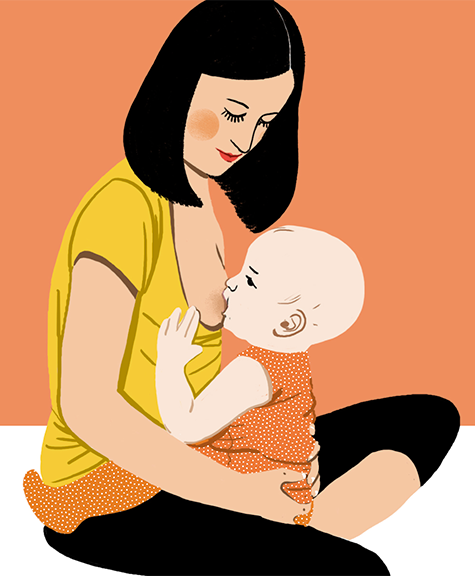
This is the probably the most popular breastfeeding position. With this nursing position you will be holding your baby on either one of your sides.
Best Breastfeeding Positions
Virtually all mothers can breastfeed provided they have accurate information and the support of their family the health care system and society at large.

Breast feeding positions. Sit in a chair with supportive armrests or on a bed with lots of pillows. They can comfortably feed their baby with the side-lying position. Football Hold Breastfeeding Position.
However if youve had a caesarean this may be uncomfortable as your baby lies across your tummy near the scar try lying on your side or the rugby hold instead. 7 of the Most Comfortable Breastfeeding Positions. Hold your baby in the crook of the arm opposite the breast youre feeding from left arm for right breast right arm for left.
Rest your wrist between your babys shoulder blades your thumb behind one ear your other fingers behind the other ear. Some mothers find that practicing with this position during the daytime is very helpful. This is the most commonly used position and probably the one youll naturally try first.
This classic breastfeeding position requires you to cradle your babys head in the crook of your arm. The cradle hold is the most common breastfeeding position. Nurse baby in an upright or semi-upright position.
Additionally your baby can also be at any angle while lying against your body. Breastfeeding is the normal way of providing young infants with the nutrients they need for healthy growth and development. If nursing from the right breast hold the head with your left hand.
Colostrum the yellowish sticky breast milk produced at the end of pregnancy is recommended by WHO as the. The mother and baby should be chest to chest. To breastfeed baby in a crossover hold position do the following.
This is a great position for Mothers who have just had a Cesarean section. Doing this gives you lots of opportunities to try different positions but the same principles will apply. For some mothers this position works best after the early days of breastfeeding.
The cross-cradle hold is ideal for early breast-feeding. The babys head is cradled near her elbow and her arm supports the infant along the back and neck. Sit up straight in a comfortable chair with armrests.
Try them out and see which one is the most comfortable for you and your baby. Cradle hold The cradle hold is similar to the cross-cradle hold but you support the baby with the arm on the same side as the nursing breast rather than the opposite arm. Heres the underarm position or football hold.
Make sure their ear shoulder and hip are in a line not twisted round. As with the cross-cradle hold sit up straight preferably in a chair with armrests. This is the classic front hold or cradle position often used with mother-led attachment.
The football breastfeeding hold is also referred to as the underarm hold or clutch hold. UNICEF Baby Friendly Initiative and Public Health England 2015. Bring your baby across the front of your body tummy to tummy.
These positions will allow your baby to better control the flow of milk and air into their mouth. Mom is lying back comfortably and baby is on top of moms chest skin-to-skin and begins to search for the nipple. Rest your feet on a stool or another raised surface to avoid leaning forward toward your baby.
While in other positions your baby is uncomfortable to deal with the fast flow of milk supply. Here are the best breastfeeding positions newborn and infant moms will love. Many mothers find lying down to nurse a comfortable position especially at night.
Breastfeeding positions to try Once youre going well with breastfeeding you can try different breastfeeding positions. The mums arm supports the baby at the breast. This position is the best at bedtime or for the mothers who have the fast flow supply breastmilk.
Previous Next 2 of 5 Breast-feeding. Hold your babys head with the hand opposite to the breast youll be nursing from ie. Laid-Back Breastfeeding aka Biological Breastfeeding Position This is the position mom and baby get into instinctively after birth.
Breastfeeding positions to prevent gas To prevent gas you can use similar strategies to reflux. The other positions may be easier to learn first. To breastfeed sitting in a chair let your baby lie across your lap with their head supported on your forearm and their nose towards your nipple.
Breastfeeding in this laid back position you can be at any angle.
Newborns fed from bottles are able to take in more during a feeding than a breastfed infants. Birth 4 months.

The Best Baby Sleep Schedule When And How To Incorporate It
Nurse or bottle 6 to 8 ounces breast milk or formula 730 pm.
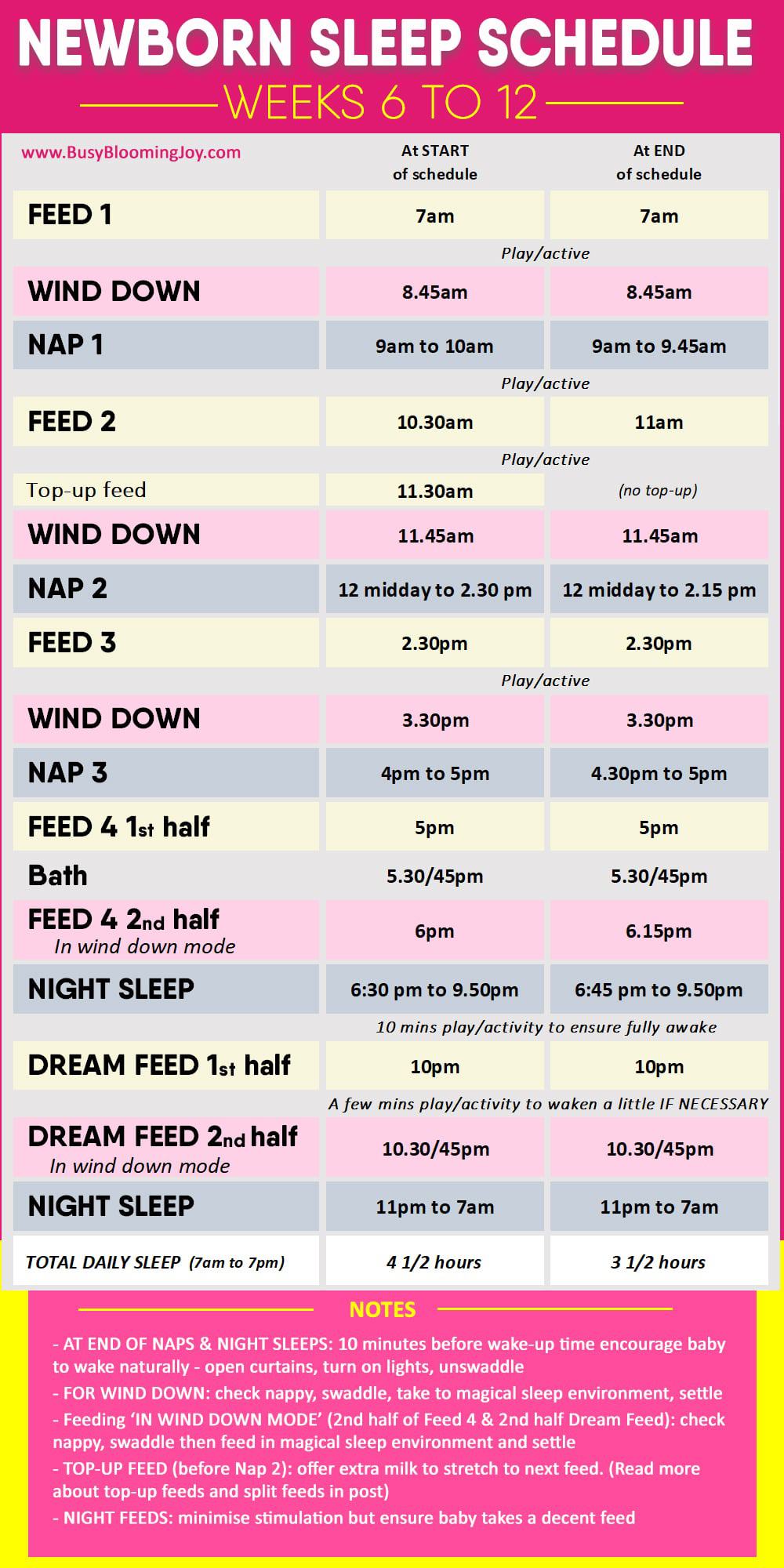
Feeding schedule newborn. Your 1-week-olds newborn sleep schedule will not be set to a clock but rather you should feed your baby on demand and put your baby to sleep when they show sleepy signs. Most infants sleeping and feeding habits become more consistent and predictable after three or four months says pediatrician Marc Weissbluth author of. At night 800 pm and later do all feeding hugging cuddling diaper changing in very dim or dark conditions.
This can be especially helpful for first-time parents. For the first 4 to 6 months breast milk or formula is the only food your baby needs. Talk with your childs doctor or nurse about how much infant formula is right for your baby.
Most newborns need eight to 12 feedings a day about one feeding every two to three hours. A formula-fed infant will take about 2 to 3 ounces per feeding and theyll eat every three to four hoursThis amount will increase as your baby grows. Week 2 diaper changes.
After feeding your baby during the day attempt to keep them awake for at least a few minutes by singing cooing playing and bonding. As a rule of thumb you should. At first your little one will keep it simple with just a few teaspoons of a one-ingredient food like a pureed fruit veggie or meat every day.
A typical feeding schedule may look like this. You may have to wake your sleepy newborn to feed in the first few days after birth. Babies this age can barely stay awake every 45 minutes usually and eat every two hours.
If you are breast feeding youll want to. A higher-frequency newborn feeding schedule helps babies compensate for the lower caloric density of their milk. Your baby will be able to drink more infant formula at each feeding and the time between feedings will get longer.
6 to 8 wet diapers a day at least 2 dirty diapers and often more Babys third week. Obviously the main reason for the baby feeding schedule is to record when you feed your baby and for how long or how many ounces. The sooner you begin each feeding the less likely youll need to soothe a frantic baby.
During the first few days or weeks breastfeedings tend to occur every 1 to 3 hours around the clock. Look for early signs of readiness to feed such as moving the hands to the mouth sucking on fists and fingers and lip smacking. As your baby grows his or her belly grows too.
But many experts including Altmann say that babies are ready for a general schedule between 2 and 4 months of age. Your newborns feeding schedule should be age-appropriate and you should never withhold food from a newborn just to stay on schedule. Fussing and crying are later cues.
And formula-feedings tend to occur every 3 to 4 hours around the clock. Week 2 feeding schedule. Every 2 to 3 hours.
On demand every 2 to 3 hours or 8 to 12 times a day or more Exclusive pumping. Like breastfed babies bottle-fed newborns should eat on demand. If you are bottle feeding you should record how many ounces she drinks each time by writing 25 oz or 3 oz etc.
Your baby will increase the consumption of table foods. Feeding Schedule for Formula-Fed Newborns Formula-fed newborns will need about two to three ounces 60 90 milliliters of formula per feeding to start with. Feed your baby whenever he or she seems hungry on-demand.
45 to 90 mL 15 to 3 oz per feeding about 8 times a day. As you create your newborn feeding schedule or baby feeding chart you may also want to include the signs of readiness to guide you as you feed your little one. Newborns are more likely to thrive when they are fed approximately 8-12 times every 24 hours.
Keep reading to discover what you can do to get started. After that you can start solid foods when your baby show signs of readiness. During the day when baby is awake and feeding open windows turn on lights and keep things very bright.
Feeding Schedule For Babies Aged 9 10 11 And 12 Months In these months there will be rapid changes in your babys feeding as they can eat a variety of foods but in lesser amounts. Here are the readiness signs to include in your baby feeding schedule according to their age. 15 to 20 minutes per breast every 2 to 3 hours Formula.
A newborn sleep schedule is also often based on how long your baby can stay awake not strictly by the clock which is usually short in the newborn days. This allows you to space out feedings by about three to four hours. Most infant formula-fed newborns will feed 8 to 12 times in 24 hours.
On average thats about every 2 to 3 hours. First Weeks and Months. It will take some trial and error to figure out the best feeding schedule for your baby but as long as your little one is eating a variety of foods and growing and thriving you can rest assured that shes well-fed.