A normal heartbeat ensures a normal heart rate. Heart rate or pulse rate is the number of times your heart beats in a minute.
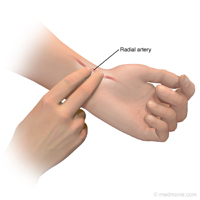
What Is A Pulse Rate And How Is It Measured First Aid For Free
Normal resting heart rate can vary from person to person but for most adults its between 60 and 100 beats per minute.
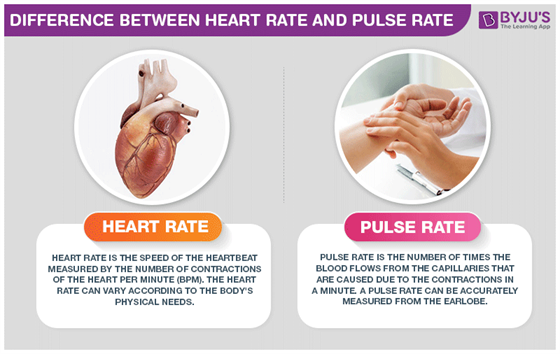
What is a pulse rate. A normal resting heart rate should be 60100 beats per minute but it can vary from minute to minute. The pulse rate is how many times one can feel a pulse every minute. It is a simple measure to know how much your heart works during rest or activities.
Heart rate is one of the vital signs that are checked regularly whenever you visit your doctor or when you get admitted to the hospital. Heart rates vary from person to person. The pulse rate is a measurement of the heart rate or the number of times the heart beats per minute.
The pulse rate is a vital sign that can tell a lot about a victims medical condition. 1 Image Source Getty Images. The normal heart rate should be in the range of 60 to 100 beats per minute for an adult.
Age and activity level are more important factors for heart rate. Your pulse rate is the number of times your heart beats per minute. Normal resting heart rate for kids Childrens heart rates are normally.
Normal Resting Heart Rate for Women. Normal heart rate varies from person to person but a normal range for adults is 60 to 100 beats per. For example a well-trained athlete might have a normal resting heart rate closer to 40 beats per minute.
Heart rate also known as pulse is the number of times a persons heart beats per minute. Ad Software and Solutions Designed For Heart Rate Monitoring Within Your ClubLearn More Now. Your heart rate or pulse is the number of times your heart beats per minute.
The heart rate can vary according to the bodys physical needs including the need to absorb oxygen and excrete carbon dioxide but is also modulated by a myriad of factors including but not limited to genetics physical fitness stress or psychological status diet drugs. It can go up to 130150 beats or higher per minute when youre exercising thats normal because the body needs to pump more oxygen-rich blood around the body. The resting pulse rate for an average adult is between 60 and 80 beats per minute.
The pulse is the surge of blood that is pushed through the arteries when the heartbeats. Pulse rate is the number of heartbeats per minute. The normal resting heart rate for adult women is similar for men between 60 bpm and 100 bpm.
An abnormal pulse rate below 60 bpm or above 100 bpm could increase your risk of cardiovascular disease stroke or early death. The pulse is often confused with the heart rate but refers instead to how many times per minute the arteries expand and contract in response to. What is the pulse rate.
Invest In Your Gyms Future and Learn Why 6000 Gym Owners Choose The Myzone System. And 70 to 100 per minute for the age of 6 to 15 years. Normal heart rate varies from person to person.
The heart rate can fluctuate due to many medical or physical conditions. Its lower when youre at rest and higher when you exercise. Invest In Your Gyms Future and Learn Why 6000 Gym Owners Choose The Myzone System.
A normal resting heart rate for adults ranges from 60 to 100 beats per minute. The pulse rate is the measured value per minute when palpating the arterial vessels through the sense of touch and is a good indicator of various blood pressures throughout the body. It is usually 72 beats per minute as we just discussed.
Heart rate is the speed of the heartbeat measured by the number of contractions beats of the heart per minute bpm. Generally a lower heart rate at rest implies more efficient heart function and better cardiovascular fitness. Your heart rate or pulse is the number of times your heart beats in 1 minute.
As the heart pushes blood through the arteries the arteries expand and contract with the flow of the blood. A good heart rate differs from individual to individual and it depends upon your age and the kind of physical work you do. The pulse rate is the number of times in a minute that an artery pulsates indicating that a heartbeat has occurred.
Taking a pulse not only measures the. Measurements of it are routinely taken whenever a patient enters a hospital clinic or doctors office for medical attention as the pulse provides important information about the patients general health and condition. To measure your heart rate simply check your pulse.
Usually after serious exercise or walking your heart rate tends to increase as the heart tries to pump more blood to make up for the demand of lost oxygen. Knowing yours can be an important heart-health gauge. Ad Software and Solutions Designed For Heart Rate Monitoring Within Your ClubLearn More Now.
As you age changes in the rate and regularity of your pulse can change and may signify a heart condition or other condition that needs to be addressed.
Ad Coach Better With The Most Accurate Heart Monitoring System. This range changes only 1 to 2 beats a minute over the years and returns to the 66 to 69 beat baseline.
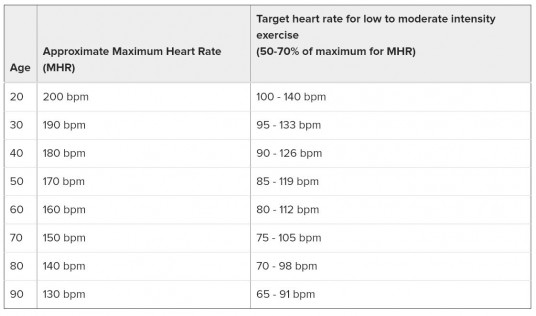
How To Check Your Pulse And Heart Rate Health Navigator Nz
A resting heart rate outside of the normal resting heart rate range combined with symptoms like shortness of breath dizziness and fatigue may indicate a heart problem.
Normal pulse rate for women. This is because the resting heart rate depends on many factors like age fitness level body type environmental factors etc. Normal resting heart rate can vary from person to person but for most adults its between 60 and 100 beats per minute. For example a well-trained athlete might have a normal resting heart rate closer to 40 beats per minute.
It is difficult to pin point and give an absolute value regarding the average rate of heart beats for women. For most healthy adult women and men resting heart rates range from 60 to 100 beats per minute. The normal pulse rate for women should be 60 to 100 beats per minute.
A normal resting heart rate for adults ranges from 60 to 100 beats per minute. No More Worrying About Competition With Myzone You Will Have Better Results. In general the normal pulse rate for women is between 60-100 beats per minute and this is also normal for men.
An athlete or more active person may have a resting heart rate as low as 40 beats per minute. If your heart rate exceeds 185 beats per minute during exercise it is dangerous for you. However a 2010 report from the Womens Health Initiative WHI indicated that a resting heart rate at the low end of that spectrum may offer some protection against heart attacks.
Your target heart rate zone is the range of heart rate that you should aim for if you want to become physically fit. An 18-year-old woman in above-average physical condition for example typically has a normal pulse rate between 66 and 69 beats per minute. Speak to a Myzone Expert.
And 70 to 100 per minute for the age of 6 to 15 years. It is calculated as 60 to 80 percent of your maximum heart rate. What Is A Good Pulse Rate For Women.
When a person exercises the body requires an increase in oxygen-rich blood. As already mentioned the average pulse rate for women might fall slightly higher in this range than mens rates do. However a good resting heart rate can be said to.
For most of us between 60 and 100 beats per minute bpm is normal1 The rate can be affected by factors like stress anxiety hormones medication and how physically active you are. Speak to a Myzone Expert. Generally a lower heart rate at rest implies more efficient heart function and better cardiovascular fitness.
The maximum pulse rate can be around 150 to 180 beats per minute depending on the age of the individual. For adults a normal resting heart rate ranges between 60 and 100 beats a minute. A normal resting heart rate range is between 60 and 100 bpm.
Answer From Edward R. Checking your pulse can also tell you if your heart beat is regular or irregular. It can go up to 130150 beats or higher per minute when youre exercising thats normal because the body needs to pump more oxygen-rich blood around the.
Whats a normal heart rate. Usually a lower resting heart rate means your heart is working more efficiently and is more fit. Most adults have a resting heart rate between 60 and 100bpm.
A normal resting heart rate should be 60100 beats per minute but it can vary from minute to minute. For example an athlete might have a resting heart rate of around 40 beats a minute. The normal pulse rate range for all adults including women who are over 50 years old is 60 to 100 beats per minute as stated by Cleveland Clinic.
According to the American Heart Association a normal heart rate for a 40-year-old woman and all adults actually is between 60 and 100 beats a minute at rest. When youre at rest its known as your resting pulse rate. The fitter you are the lower your resting heart rate is likely to be.
What is a normal resting heart rate. Suppose your age is 35 years your maximum heart rate is 185 beats per minute. A good pulse rate however.
The normal heart rate should be in the range of 60 to 100 beats per minute for an adult. Normal resting heart rate for kids Childrens heart rates are normally. This correlation held regardless of race or ethnicity and was independent of diabetes hypertension and unfavorable cholesterol levels.
For example athletes may have a resting heart rate of 40 to 60bpm or lower. A good heart rate differs from individual to individual and it depends upon your age and the kind of physical work you do. Women with the highest resting heart rates more than 76 beats per minute were 26 more likely to have a heart attack or die from one than those with the lowest resting heart rates 62 beats per minute or less.
Women who are active or exercising might notice an increase in their heart rate. Ad Coach Better With The Most Accurate Heart Monitoring System. No More Worrying About Competition With Myzone You Will Have Better Results.
To measure your heart rate simply check your pulse. For adults the normal pulse rate is considered to be around 60 beats per minute.

Resting Heart Rate What S Normal How To Improve It Whoop
Children tend to have higher resting heart rates than adults.
What's a normal pulse. If youre sitting or lying and youre calm relaxed and arent ill your heart rate is normally between 60 beats per minute and 100 beats per minute. A blood pressure reading has two components systolic blood pressure and diastolic blood pressure explains Johns Hopkins Medicine. However this number may rise with age and is.
Pulse oximeter oxygen saturation. A good heart rate differs from individual to individual and it depends upon your age and the kind of physical work you do. 1 The rate can be affected by factors like stress anxiety hormones medication and how physically active you are.
It can go up to 130150 beats or higher per minute when youre exercising thats normal because the body needs to pump more oxygen-rich blood around the body. And 70 to 100 per minute for the age of 6 to 15 years. They may feel the pulse in their chest neck or wrists.
In adults a normal pulse rate ranges from 60 to 100 beats per minute. A bounding pulse is when a person can feel their heart beating strongly. If youve been active youll need to wait at least five minutes before taking your pulse.
The heart rate gets progressively slower as a person moves through childhood toward adolescence. What are normal levels and when should I worry. Since its development in the 1970s it has made a significant impact particularly in the fields intensive care medicine.
During sleep a slow heartbeat with rates around 4050 bpm is common and is considered normal. Their pulse rate can go as high as 100 if the individual is using certain medications has a fever anemia etc. Heart rate also known as pulse is the number of times a persons heart beats per minute.
Some patients with chronic lung disease or sleep apnea can have normal levels of around 90. A normal resting heart rate for adults ranges from 60 to 100 beats per minute. The American Heart Association states the normal resting adult human heart rate is 60100 bpm.
Most adults have a resting heart rate between 60 and 100bpm. Normal SpO2 is usually at least 95. Readings below 90 often indicate that someone needs to have supplemental oxygen.
Systolic blood pressure the top number in a blood pressure reading is the pressure in the arteries when the heart muscle contracts. Tachycardia is a high heart rate defined as above 100 bpm at rest. Your resting heart rate is the heart pumping the lowest amount of blood you need because youre not exercising.
When youre active your heart beats faster to get more oxygen to your working muscles. If the resting pulse rate is constantly at 100 beats per minute a doctor needs to be consulted as soon as possible. The fitter you are the lower your resting heart rate is likely to be.
This is usually their resting pulse rate. Women tend to be smaller than men. Generally a lower heart rate at rest implies more efficient heart function and better cardiovascular fitness.
A womans pulse may be slightly faster. For example a well-trained athlete might have a normal resting heart rate closer to 40 beats per minute. Your pulse rate is the number of times your heart beats per minute.
Pulse oximetry allows a rapid noninvasive estimate of arterial oxygen saturation. Pulse pressure tends to increase after the age of. The normal heart rate should be in the range of 60 to 100 beats per minute for an adult.
Whats a normal measurement. A normal heart rate when youre not being active is between 60 100 beats per minute. For most of us between 60 and 100 beats per minute bpm is normal.
A normal resting heart rate should be 60100 beats per minute but it can vary from minute to minute. An athlete or more active person may have a resting heart rate as low as 40 beats per minute. This is often caused by anxiety or panic attacks though in some.
What Is The Normal Pulse Rate For Adults. According to the American Heart Association AHA the average resting heart rate is between 60 and 100 beats per minute. Normal heart rate varies from person to person but a normal range for adults is 60 to 100 beats per.
Whats a normal heart rate. This is called your resting heart rate. The normal range of pulse pressure is between 40 and 60 mm Hg.
Pulse does not differ much between men and women. A normal resting heart rate is usually 60-100 beats per minute. Although the normal range is 60 to 100 a typical resting pulse is around 60 to 80 says Michael Bungo MD a professor of cardiovascular medicine at McGovern Medical School and UTHealth in Houston Texas.
A normal reading is 95 to 99. Your number may vary. The normal resting heart rate for adults over the age of.
Bradycardia is a low heart rate defined as below 60 bpm at rest.